
Last week we hosted Alt Cloud meetups in Boston and New York City. It was great to be back after a summer away from these events!
Across the two evenings our four speakers covered a lot of ground: how long-running agents can burn less tokens, what an AI-first company looks like under the hood, the nuances of community push back on large-scale AI infrastructure, and how controlling agent traffic is a throwback to the earliest days of the internet.
Even though I wouldn’t describe myself as technical, I walked away with a whole lot of new knowledge. Here is a short recap of what I learned.
First, Boston
Jack O'Brien, who is the CEO and co-founder of Subconscious and a repeat startup founder, gave a great presentation to kick things off.
Since I’m not an engineer by training, I really appreciated how Jack broke it all down. He walked us through what happens as an LLM chews through millions of tokens to finish long-running tasks (like writing software) and why so many of those tokens are wasted.
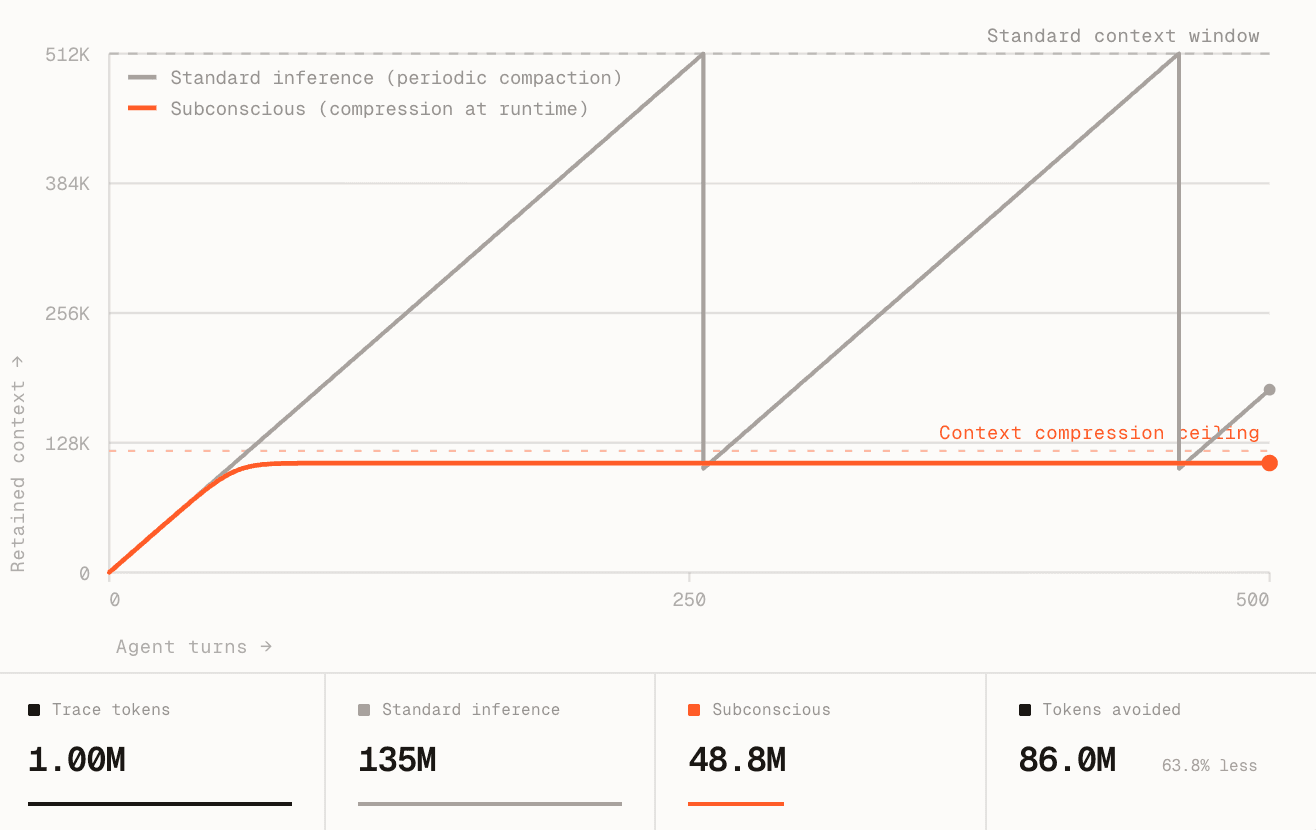
Most of the waste comes from how context is carried forward over a session. His demo made the case that managing context and compaction well is one of the biggest levers developers have, and it’s not even that hard to do (as long as you sign up for subconscious.dev right?!). Basically, you have to take the trash out a lot!
I enjoyed seeing the Subconscious backend, where Jack was able to show real jobs and the exact optimizations his platform was making. The pitch was sort of obvious by the end: lower costs, shorter run times, and better accuracy on the same tasks. Who doesn’t like those things?
Lessons from Shopify's AI Culture
Sebastian Bryers is a Lead Solutions Engineer at Shopify, but he wasn’t always in tech. In fact, he found his way to Shopify through his own personal wellness supply company, which was an early and large Shopify customer. Finally, the stars aligned and Sebastian made the leap to work internally during what is obviously a super fascinating time.
His presentation gave us a front row look at Shopify's push to an AI-first culture. While Sebastian’s team focuses on merchant success, they’ve adopted an “Agile” process inspired by software engineering teams. The catch? It all happens in the background with agents: sprint planning, scoping, standups, handoffs, etc. It was pretty incredible to see.
He walked through some tools he built (with names all inspired by a love of golf) and explained how Shopify pulls context from across the business so that agents can handle most of the toil across functions. During the Q&A the obvious questions came up: with agents taking on much of the traditional workload, what’s left? Ends up: human collaboration.
If you’re looking to learn more about what life and work is like at Shopify, I recommend taking a look at this article from First Round.
Next Up, the Big Apple
After sitting through a bunch of traffic on the FDR, we landed in NYC for our hometown meetup.
David Gilford, Founder of Policy Alpha, kicked us off by framing the discussion around building AI infrastructure in communities the same way folks think about networks: as a layered stack. For instance: if residents, workers and ratepayers don’t believe a developer will follow through on its commitments, everything built on top gets shaky.
David centered things for me with a physical description of what we’re talking about: a single NVIDIA GB300 NVL72 rack can draw up to 142 kW (equivalent to 10-15 standard American homes at full utilization) and weighs about 3,500 pounds (the same as a Toyota RAV4). If you multiply that to fill a large campus, it’s clear that choices made inside a rack quickly become questions about power delivery, cooling, land, and transmission.
For the people living nearby, these are questions about their neighborhoods and their everyday lives. As David put it, the cloud now has an address, which has put datacenters front and center on the political conversation. For instance, in November 2025, Texas Governor Greg Abbott stood with Google to announce a $40 billion investment. By June 2026, he called to ban data centers in rural Texas neighborhoods.
David also put his finger on one reason why these conversations are so difficult: both sides have differing concerns and something different at stake. When one side does not understand the other side’s concerns, it's easy to mistake it for being unreasonable. Also, the gap in resources amplifies the challenge. A developer pursuing a $1B project might have experts in power, tax, and land use on their side, while the residents and local officials in a rural community almost certainly have none. For good things to happen, such gaps need to be filled.
Look Ma, No Public IPs!
Drew Raines, our own Head of Engineering, closed out the evening with a talk about Galactic VPC. But instead of starting with the tech, Drew spent time peddling internet history. I loved it.
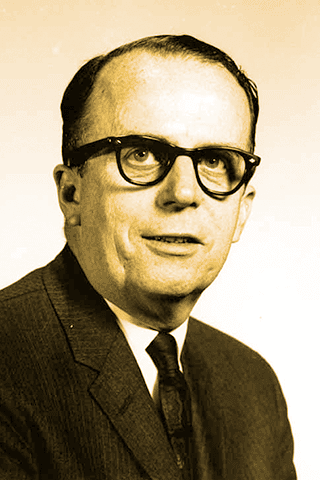
Everything started to come together when Drew showed J.C.R. Licklider's proposal for an Intergalactic Computer Network (an early-1960s proposal for a globally interconnected computer system) which inspired the ARPANET and later the internet. No wonder Peter has been so excited about Galactic VPC!
Drew demoed Datum's current Galactic VPC functionality, which lets agents and users create as many SRv6 overlay networks as they need. Those networks can reach anywhere, without public IPs, to provide more control over privacy, observability, and performance.
Happily for all of us, the main creator of Galactic VPC was in the room (shout out to Peter!) and was able to go deep on the technical details with a geeky crowd.
Tying it together
I love how the four talks approached AI from a different angle, while coming back to the same question: what does it take to make all of this work well? From making better use of tokens and letting agents handle repetitive work so people have more room for ideas to building trust with communities and keeping networks and data private in this new era, the meetups touched on a bit of everything.
A big thanks to Jack, Sebastian, David, and Drew, and to everyone who came out in Boston and New York (and especially for making sure that no pizza was left behind).
We'll be back in Boston on November 17th (register) to hear from Ben Vandiver, co-founder of G5 Labs and John Willes, co-founder of Auto Inference. If you’re in NYC, stop by on November 18th to learn from Michael Waldman, founder of AskLoci.ai and Rob May, founder of Neurometric.
I hope to see you there!